

Corporate driver programme
Every driverwe assess hasfaults theydon’t know about.
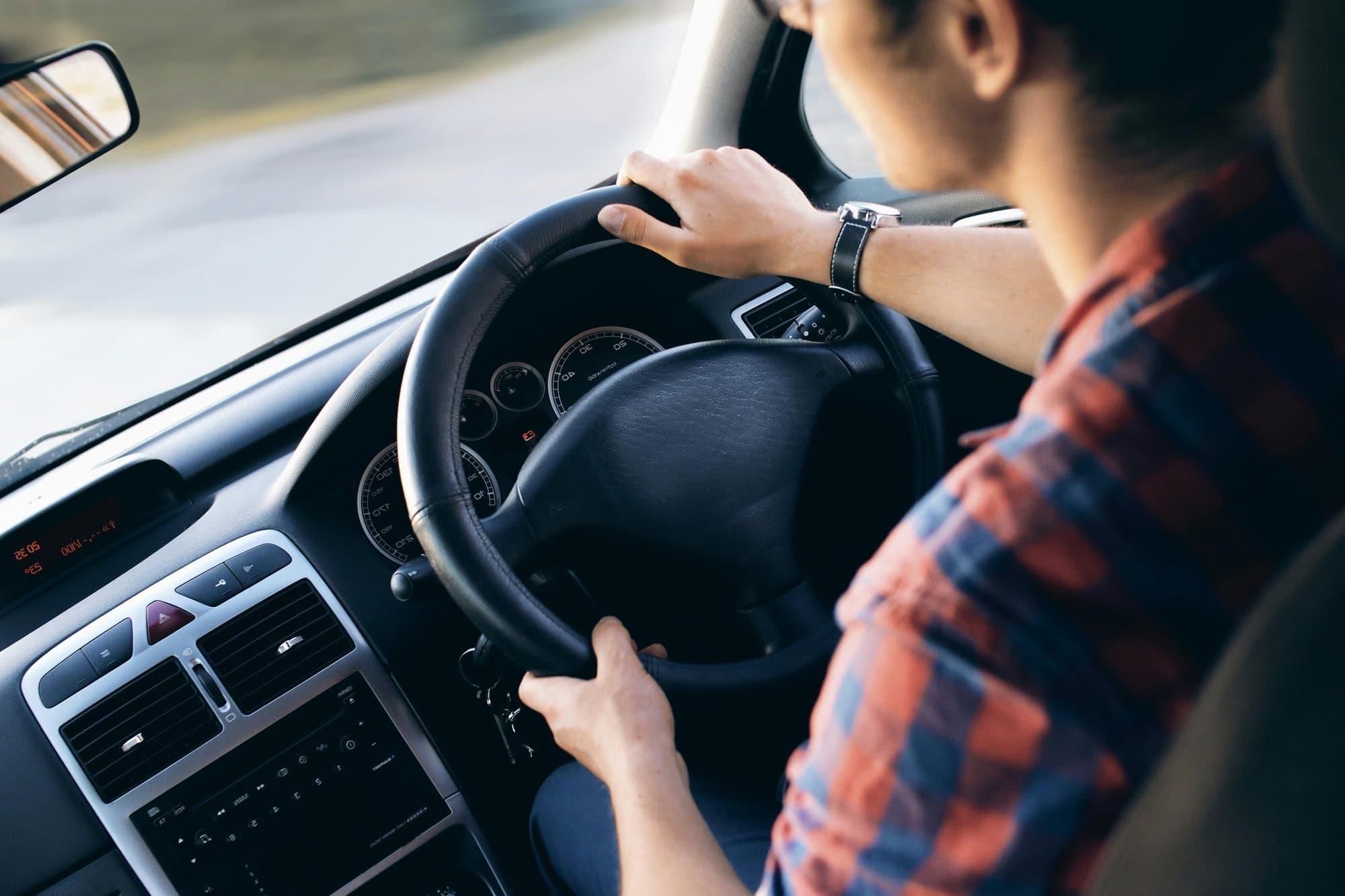
We assess company car drivers on real roads in their own vehicles, screen their health at your depot, and teach them your own driver policy — delivered by instructors from a Garda Driving School background.
Where to start
The problem we solve
Companies come to us for one of four reasons. Each module stands alone — but the three together are what change the standard, and what deliver the most for the money.
Module one
Poor driving standards
Collisions, near misses, vehicle damage and at-fault claims.
What we do
On-road assessment and Roadcraft instruction, delivered in the driver’s own vehicle.
Driver trainingModule two
Fitness to drive
Undiagnosed health issues affecting alertness, reaction and judgement.
What we do
On-site health screening with an individual written report for every driver.
Health screeningModule three
Compliance and duty of care
No evidence that drivers are trained, competent and fit to drive.
What we do
Your own policy taught to your drivers, and a report back on what they raise as we go through it.
Your company policyIncluded in all
No visibility of risk
No way of knowing which drivers actually carry the risk.
What we do
Risk-stratified reporting on driving skills, by name. Health results stay confidential to the driver.

What we assess
The drive they actually do — not a demonstration in a training car.
The system
Every hazard, in the same order, every time.
Roadcraft is the system of car control used by the Garda Driving School and the emergency services. It is applied to every hazard, in the same order, every time.
Assessed in their own company vehicle, on real roads
- Phase 1 of 5
Information
Taken, used and given — running through every other phase.
- Phase 2 of 5
Position
Positioned for safety, visibility and stability.
- Phase 3 of 5
Speed
Adjusted to suit the hazard before reaching it.
- Phase 4 of 5
Gear
Selected for that speed, once the braking is done.
- Phase 5 of 5
Acceleration
Away smoothly and safely once the hazard is clear.
Assessed and coached on the day
- Observation
- Anticipation
- Hazard identification
- Reaction
- Road surfaces
- Town driving
- Steering technique
- Skid causes
The evidence
What we find on the road
Faults recorded across every assessment drive completed to date. Anonymised, and ranked by how often they appear.
- 59%
Positioning and approach
Position and approach to bends, junctions, roundabouts and hazards — and lane position — outside the system.
Position and approach to bends, junctions, roundabouts and hazards — and lane position — outside the system.
- 44%
Steering hold and grip
Held at nine-to-three, ten-to-four or eleven-to-one, or locked on the wheel instead of a ten-to-two pull-push hold.
Held at nine-to-three, ten-to-four or eleven-to-one, or locked on the wheel instead of a ten-to-two pull-push hold.
- 31%
Momentum and speed
Easing on and off the accelerator, or carrying momentum into a hazard where a reduction was needed.
Easing on and off the accelerator, or carrying momentum into a hazard where a reduction was needed.
- 28%
Gear selection
Changing up before the gear has done its work, over-using top gear, or changing down while still losing speed.
Changing up before the gear has done its work, over-using top gear, or changing down while still losing speed.
- 22%
Over-caution and hesitancy
Nervousness and indecision that signals the wrong intention to other road users and costs progress.
Nervousness and indecision that signals the wrong intention to other road users and costs progress.
- 13%
Braking faults
Harsh initial contact with the brake, over-braking, or braking through a bend.
Harsh initial contact with the brake, over-braking, or braking through a bend.
Not one of these is a licence-test failure. Every driver assessed holds a full licence and drives every day — these are the habits that turn a routine hazard into a collision.
The evidence
What we find when we screen
Aggregate, anonymised findings from Drivewise driver health screening to date.
had above-normal blood pressure on the day of testing
were in Stage 2 hypertension, where medication is normally recommended
were in hypertensive crisis territory (≥180/120 mmHg)
had visceral fat in the very-high-risk band
Only 6% returned a blood pressure reading in the normal range. Almost none of them had any idea — they felt well, and they were driving every day.
The evidence
What changes afterwards
Screening only pays back if people act on it. Every participant is followed up personally a few weeks later — which is how we measure impact rather than activity.
of everyone screened has taken concrete preventative action since the day
Of those who replied
- 01Over half had been to a GP or a specialist
- 02A third had started or increased structured exercise
- 03A third reported improved readings since testing
- 04Several are now on prescribed blood-pressure medication
That day was a real wake-up call. Got my BP rechecked and I’ve since rejoined the gym.
Back in the gym, improving every week. Thanks for the nudge — I badly needed it.
I was placed on BP medication for a month, with a follow-up at the GP.
Every quote is an anonymised follow-up response from a screened driver.

Why it matters
Every driver we have assessed had something worth correcting.
Who delivers it

D.J. O’Dwyer
Owner, Drivewise · Thirty years An Garda Síochána
Registered Approved Driving Instructors (ADI) and Advanced Driving Instructors, from a Garda Driving School background.
- MSc Performance Coaching
- Physical Education Lecturer, Garda College
- Advanced Garda Driving Instructor
- 01
RSA-approved instruction
Category B and Category BE training delivered under the Road Safety Authority model.
- 02
Emergency services training
Response driving instruction provided to the National Ambulance Service.
- 03
Court-directed assessment
Driver assessments and on-road tuition carried out at the direction of the Courts.
- 04
Collision investigation
Investigation of fatal and serious collisions — first-hand understanding of how and why they happen.
- 05
Garda Driving School
Advanced Garda Driving Instructor attached to the Garda Driving School, Garda College, Templemore.
What the company sees
Two kinds of data, treated differently
It is worth being clear about the line before we start — and it is the question fleet managers ask first.
What we report to you
- Driving assessment findings, by name — faults and agreed actions
- A driving risk profile for the group — low, medium and high
- A policy feedback report — where your own policy is unclear, impractical or not being followed
- Attendance, completion and training records
- Anonymised health trends, where Module Two is taken
What we never report
- Any individual’s health result — no readings, no diagnoses, no names
- Anything that could identify a driver within a small group
- We do not declare anyone fit or unfit to drive; that is a doctor’s call
Why
Driving performance is work performance — it is yours to see. Health information is special category data under GDPR. It belongs to the driver, and it is not ours to pass on.
If something urgent shows up
Any driver whose results need urgent attention is told on the day, directed to their GP, and that advice is recorded. Your own driver policy is what requires them to notify you.
The commercial case
The ethical case makes itself.
This is the commercial one.


- 01
The cost of one collision
A single at-fault collision is a substantial cost to a company — excess, repair, downtime and the claims record that follows it.
- 02
Damage, downtime and wear
Kerbed wheels, bumper damage, clutch and brake wear — costs that never reach a claim but always reach the budget.
- 03
Insurance and evidence
Insurers price on claims history, driver profile and how a fleet is managed. This improves all three — and gives your broker evidence to use.
- 04
Reputation and retention
Your vehicles carry your name, and so does the way they are driven. Drivers who feel invested in are the ones who stay.
Every driver we have assessed had something worth correcting — and the cost of finding it is a fraction of the cost of missing it.
The ask
Three steps, and a first cohort can be in the diary.
- 01
Confirm scope
A short session to agree driver numbers, locations and dates — and to set the cost per cohort against your own numbers.
- 02
Run a first cohort
A single day. Every driver assessed, coached and debriefed on the road, with a written report on their own drive.
- 03
Report and schedule
An anonymised summary within two weeks, then a plan on rolling out across the country and re-testing annually.
Every cohort we have assessed has surfaced faults the drivers did not know they had. On this evidence, your drivers are carrying the same habits today — the only question is whether anyone has looked.